
Challenges and Results
Challenges
- Responding to inquiries took a great deal of work, and the burden on staff remained high
- FAQs were also created by hand, which made it difficult to build up knowledge on an ongoing basis
- With both problems combined, neither operational efficiency nor the use of knowledge improved much
Results
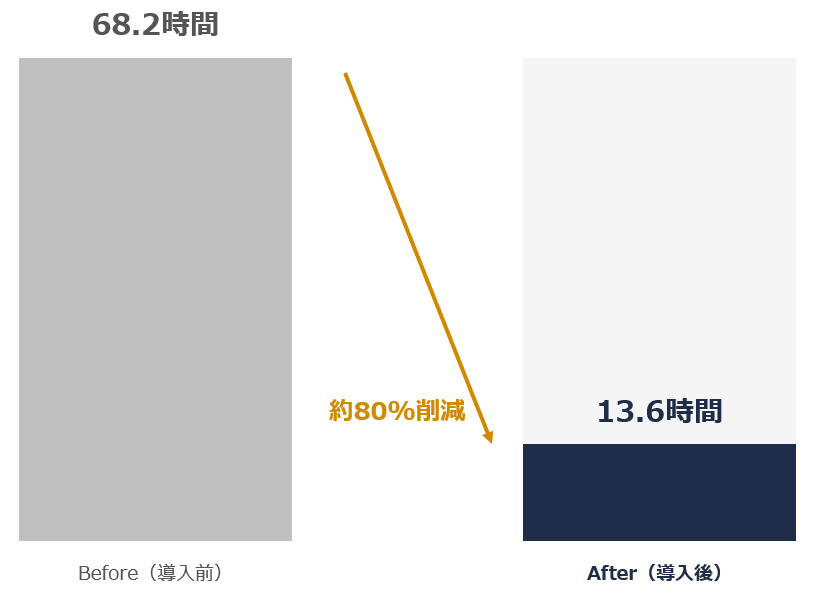
- Reduced the time spent on help desk work from 68.2 hours to 13.6 hours a month (a workload reduction of about 80%)
- A RAG architecture built on ChatGPT improved the accuracy and speed of knowledge use
Before
Inquiry handling and FAQ creation, both done by hand and both a burden
At the internal help desk, responding to inquiries took considerable time and effort, and the workload on staff remained high. In addition, new FAQs based on the inquiries received were also created by hand, which made it difficult to build up knowledge on an ongoing basis.
With these two problems combined, neither operational efficiency nor the use of knowledge improved much. Each inquiry was handled from scratch, and the responses were never captured as FAQs that could serve as an asset. The result was a vicious cycle in which similar responses were repeated again and again.
Inquiries also covered a wide range of topics, such as password resets, how to operate internal systems, and procedures for requesting supplies, and staff had to write each answer while trying to recall past responses. Existing FAQs were scattered across several places, including Excel files, the internal wiki, and old emails, which created a secondary problem: the staff themselves could not keep track of what was written where.
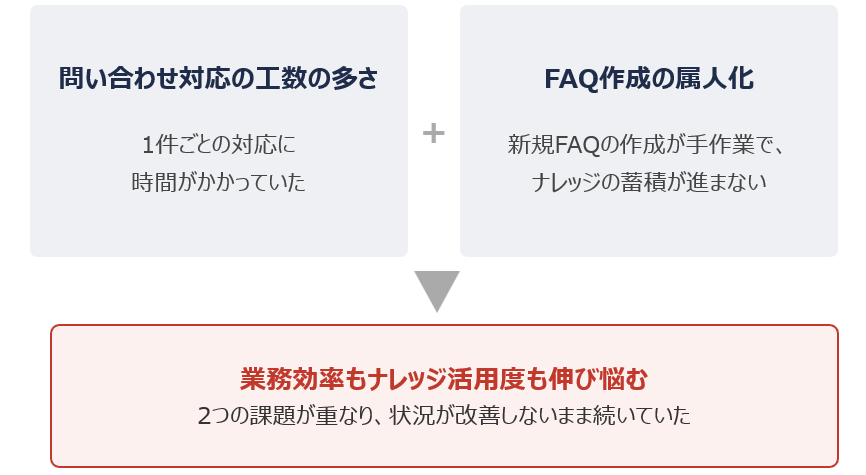
Figure: The chain of challenges facing the help desk
Redesign
Automating search and FAQ creation with ChatGPT-based RAG and Power Platform
To make help desk work more efficient, ITSO built a solution that automates two functions. The first automatically searches the knowledge base for FAQs relevant to the text of an inquiry. The second automatically generates new FAQs from the content of inquiries.
Both functions use RAG (Retrieval-Augmented Generation) built on ChatGPT, and Microsoft Power Platform connects them with existing business workflows.
1. How automatic FAQ search works
When the text of an inquiry is entered, the RAG mechanism uses vector search to retrieve related FAQs in the knowledge base, and ChatGPT generates an answer based on their content. Instead of presenting the search results as they are, the system summarizes and formats the answer to fit the context of the inquiry, sparing staff the effort of hunting for the relevant passage.
2. How automatic generation of new FAQs works
When an inquiry is not covered by the existing FAQs, ChatGPT automatically drafts a new FAQ based on its content. Staff review each draft before adding it to the knowledge base. This process prevents incorrect AI-generated information from slipping in while greatly speeding up the accumulation of knowledge.
Step-by-step refinement starting from an MVP
Development prioritized speed, starting with an MVP (Minimum Viable Product). ITSO took the approach of refining the UI/UX step by step while confirming the intended deliverable with the client. The early MVP had room for improvement in search accuracy and the wording of answers, but by adjusting the structure of the knowledge base and the prompts based on actual inquiry data, ITSO raised the quality to a level that holds up in day-to-day work.
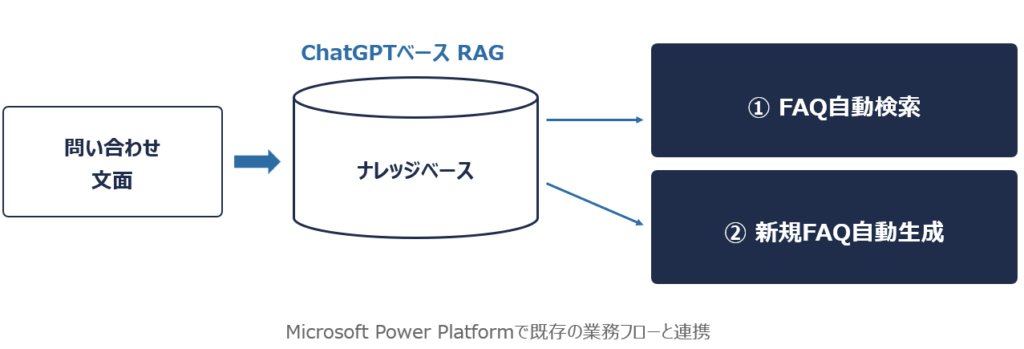
Figure: Overview of automation with ChatGPT-based RAG
After
From 68.2 to 13.6 hours a month, a workload reduction of about 80%
After the solution went live, the time spent on help desk work fell sharply, from 68.2 hours to 13.6 hours a month. Automating both inquiry handling and FAQ creation has greatly reduced the burden on staff.
The ChatGPT-based RAG architecture has also improved the accuracy and speed of knowledge use itself. A key outcome of the project is that it went beyond simply reducing workload: the accumulated knowledge is now actually being put to use.
Staff on the front line say that spending less time on simple inquiries has freed them to focus on the work that deserves their attention, such as more complex consultations and improvement proposals.
This project focused on the help desk, but the same structural challenges of handling inquiries and building up knowledge are common to other back-office functions such as general affairs and HR. Going forward, the aim is to develop the solution into a company-wide platform for knowledge use by extending it to other departments and broadening the range of inquiries it can handle.